Life around the burning ghat
Portraits of life in the shadow of the eternal fire
For more than 2,500 years, an eternal flame has been burning in the heart of Benares.
Here, death is not hidden: it walks through the streets, breathes in the rituals, and is accepted as part of the journey.
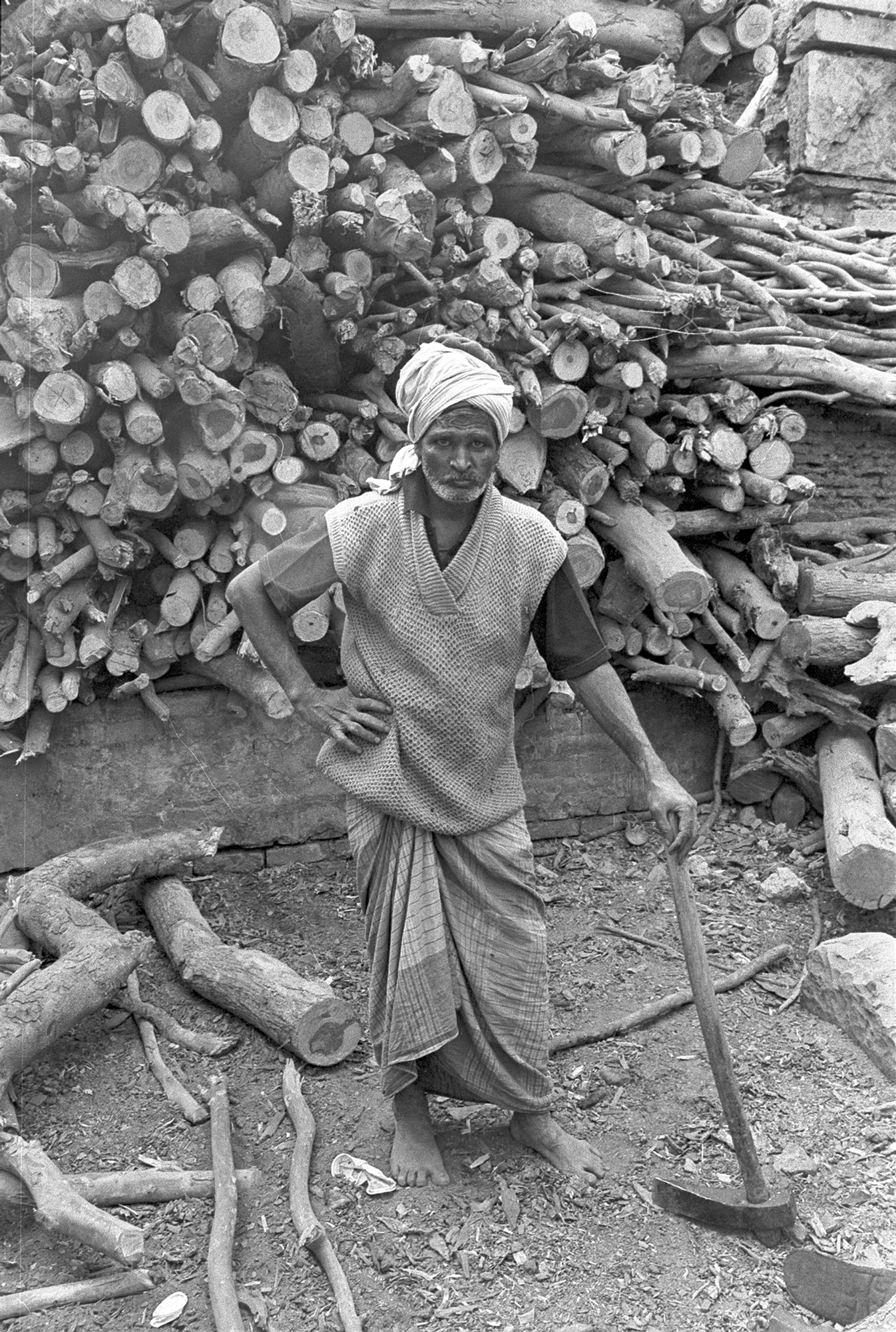
At the center is the burning ghat, where bodies turn to ash beside the Ganges. But my focus was on what surrounds it: the constant movement, the murmur of voices, the men working wood with bare feet and weathered hands. Their craft has changed little over centuries; their presence is constant, day and night, beneath the same veil of smoke.
I spent several days among them: sharing tea, talking, observing their rhythm of work and rest. Many live there, in small spaces hidden among the stacks of logs, with life unfolding in the shadow of the flames.
The wood, essential to keep the flame alive, arrives in large quantities from distant places, transported by trains, trucks, and boats that glide along the river’s current. The first spark for each pyre is always taken from the eternal fire—which is said to belong to Shiva, though legend whispers it was Parvati’s funeral pyre, burning for thousands of years.
Here, the living and the dead share the same space. Families light the flames with their own hands for those they love. Just behind, in a silent building, the poor and lonely await their final journey, trusting that the generosity of others will fulfill their wish.
In this place, life and death are not opposites. They are two currents that flow together, and the ghat is where they meet.